When selling on Amazon, who wouldn’t want their products to the first page of search results? After all, buyers don’t have the patience to scroll to the tenth page looking for your items. To achieve this, you need to keep up with Amazon’s algorithm updates. From the old A9 to the current A10, while the algorithm evolves, sellers’ goal of standing out from the competition remains unchanged. Only by understanding the ins and outs of the A10 algorithm can you find new leverage for explosive sales.
A10 Algorithm: The Smarter Search Conductor
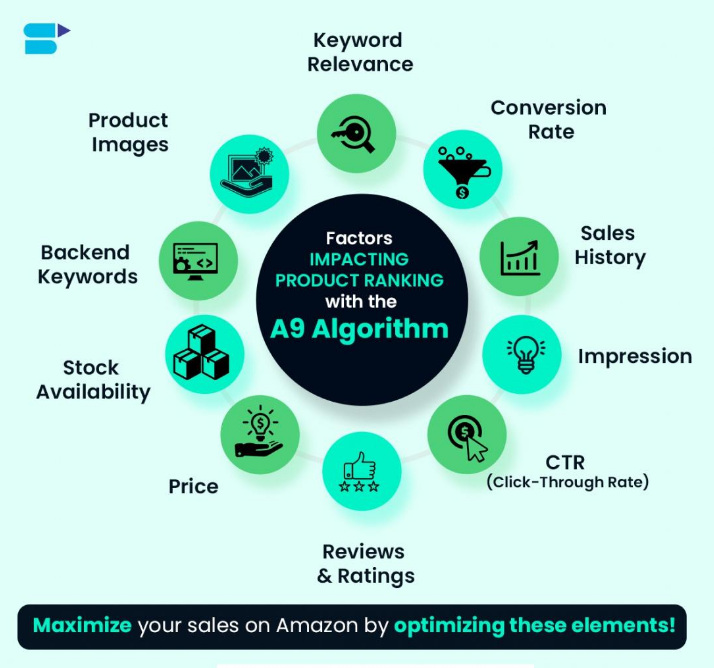
The A10 algorithm is Amazon’s latest core search engine technology, acting like a precise conductor that determines the display order of products when customers search. This algorithm relies on artificial intelligence and natural language processing to score and rank products, with the ability to continuously evolve through machine learning. It evaluates product relevance from multiple dimensions, including front-end keywords carefully placed in titles and bullet points by sellers, as well as back-end keywords hidden in meta tags that are invisible to buyers but affect rankings.
Customer reviews are even more crucial—after all, 94% of consumers avoid brands with poor ratings. Positive reviews not only build trust but also serve as a key indicator for the algorithm to judge a product’s popularity. Additionally, sales velocity (how quickly products sell), conversion rates (the proportion of viewers or clickers who actually place orders), click-through rates (CTR, the frequency of clicks on product listings in search results), and the authority a seller has accumulated on the platform all influence the final ranking.
From A9 to A10: Decoding the Algorithm’s Evolution
A10 didn’t emerge out of nowhere; it’s an upgraded version of the A9 algorithm. While both share the core goal of delivering relevant search results to customers, their priorities differ significantly. A9 relied more on internal platform data, such as sales history and conversion rates, whereas A10 has expanded its scope beyond the platform, now valuing external signals like off-site traffic and social media mentions.
To put it metaphorically, A9 was like a shopkeeper who only looked at the store’s internal accounts, while A10 is a shrewd boss who checks both the accounts and market reputation. It retains A9’s focus on sales history and keyword relevance while adding new evaluation dimensions like seller authority and click-through rates, making the judgment criteria more comprehensive.
Beneath this change lies Amazon’s unwavering commitment to being “customer-centric.” A10 improves search speed and accuracy, helping customers find what they want faster; leverages external signals to gain insights into customers’ behavior outside the platform, making recommendations more precise; and, with the self-evolving capability of machine learning, continuously optimizes search results. Ultimately, its purpose is to make customers’ shopping experience pleasant and satisfying.
Practical Tips to Leverage the A10 Algorithm
To make your products stand out under the A10 algorithm, understanding theory alone isn’t enough—you need practical, actionable methods:
Keywords are the foundation. First, figure out what words customers use when searching for products like yours, then skillfully incorporate these words into titles, descriptions, and back-end keywords. For example, if you sell thermal mugs and find that “stainless steel portable thermal mug” has high search volume, find a way to include this phrase in key positions.
Visuals grab attention. People are visual creatures, and high-quality images and videos can significantly boost click-through rates. Take photos from multiple angles, clearly showcasing the product’s details, usage, and advantages—so that customers will be tempted to click at first glance.
Review management requires attention. High-quality products and services are the basis. On top of that, you can gently encourage customers to leave reviews. Don’t avoid negative reviews; respond promptly to resolve issues. This not only retains customers but also shows the algorithm your sense of responsibility.
Use ads and promotions. Amazon’s PPC ads can make your products more visible in search results, and promotions like Lightning Deals can quickly attract traffic. But don’t invest blindly—adjust your strategy based on data.
Data monitoring is essential. Regularly check metrics like click-through rates, conversion rates, and sales velocity. Identify which methods work and which don’t; let data guide your continuous optimization.
In the end, no matter how complex the A10 algorithm is, its core revolves around customer experience. As long as sellers align with this logic, refine details like keywords, reviews, and visuals, and combine them with reasonable promotion and data analysis, they can find their own path to explosive sales within the algorithm’s framework. After all, while algorithms change, great products and services will always be king.
Question: What are the core differences between Amazon’s A10 algorithm and A9 algorithm? What strategic direction of Amazon does this shift reflect?
Answer: The core difference is that A10 places more emphasis on external signals (such as off-site traffic and sales, social media mentions) and seller authority, while A9 mainly relies on internal data (such as sales history, conversion rates). This shift reflects Amazon’s strategic direction of expanding from relying solely on internal platform data to broader insights into customer behavior, further strengthening the “customer-centric” concept. It aims to provide more relevant and high-quality search results through more comprehensive information, thereby enhancing the customer experience.
Question: What are the key factors affecting the ranking of Amazon’s A10 algorithm? Which of them are newly added core variables?
Answer: The key factors include front-end/back-end keywords, customer reviews, sales velocity, conversion rate, click-through rate (CTR), seller authority, off-site traffic and sales, etc. Among them, the newly added core variables are seller authority, click-through rate, and off-site traffic and sales. These variables enable the A10 algorithm to evaluate product and seller performance more comprehensively and expand the scope of understanding customer behavior.
Question: What specific strategies can sellers adopt to optimize their products’ search rankings under the A10 algorithm? Which core factors do these strategies target respectively?
Answer: The specific strategies and their corresponding core factors are as follows: ① Keyword research: Targeting front-end/back-end keywords to improve search relevance; ② Using high-quality visual effects: Targeting click-through rate to enhance the attractiveness of product displays; ③ Encouraging positive reviews and replying promptly: Targeting customer reviews to build trust and satisfaction; ④ Utilizing PPC advertising and promotions: Targeting sales velocity and conversion rate to increase traffic and purchase conversion; ⑤ Analyzing performance indicators (click-through rate, conversion rate, etc.): Targeting sales-related indicators to optimize strategies driven by data.