Today we’re focusing on a critical factor that directly impacts Amazon sales—Amazon Ratings. As most sellers know, listings with high ratings typically have higher click-through and conversion rates; this is tangible protection for your business. Let’s start with the basics: How exactly is the Amazon Rating calculated?
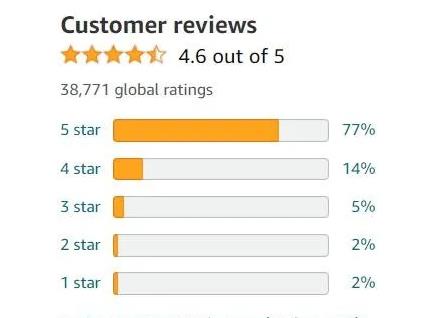
1. How Is Amazon Ratings Calculated?
There are two core calculation methods, and we’ll focus on the most practical one first:
- Method 1: Sum of (Star Rating × Percentage)
For example, if 70% of reviews are 5-star and 20% are 4-star, calculate (5×70%) + (4×20%) and add the results of other star ratings—this total is your Rating.
- Method 2: (Sum of Star Ratings × Review Count) ÷ Total Reviews
This method requires counting the number of reviews for each star rating individually, which is time-consuming. Most sellers prefer Method 1.
A key detail: Ratings are calculated to three decimal places. The third decimal is truncated (not rounded), and the first two decimals are rounded normally—this is why you only see Ratings like “4.5” or “3.8” on the frontend, not random values.
2. How Star Displays Correlate to Ratings
Here’s a clear breakdown of how Ratings translate to visible stars on the frontend:
- If the first decimal is 0–2 (e.g., 4.0–4.2): Displays as full stars (4 full stars).
- If the first decimal is 3–7 (e.g., 4.3–4.7): Displays as full stars + half a star (4.5 stars).
- If the first decimal is 8–9 (e.g., 4.8–4.9): Displays as the next full star (5 full stars).
Next time you check a competitor’s Ratings, you’ll know their approximate actual score range.
3. Can 5-Star Reviews Offset 1-Star Reviews?
The short answer: No fixed number exists.
Why? The impact depends on your total review count and the existing number of each star rating. For example:
- With only 10 total reviews, one 1-star review has a huge negative impact.
- With 1,000 total reviews, one 1-star review carries far less weight.
You’ll need to estimate based on your store’s specific review data—there’s no one-size-fits-all answer.
4. 3 Actionable Strategies to Boost Ratings
Improving Ratings requires targeted effort. Here are three practical approaches:
4.1 Prioritize Product Quality
Whether you sell high or low-priced items, quality is the foundation. If you get 1-star reviews for “poor quality” or “unusable products,” fixing this later is hard—and it will derail your product launch. Customers buy products to use and enjoy; ignoring quality issues makes all other tactics useless.
4.2 Step Up Post-Purchase Support
Don’t wait for negative reviews to act—proactively follow up with customers:
- Respond quickly to questions.
- Fulfill reasonable requests (e.g., return/refund or compensation plans).
Doing this well may lead customers to leave positive reviews; even if they’re unhappy, resolving their issue can persuade them to remove a negative review—it’s your “second chance” to earn a good rating.
4.3 Request Reviews Strategically
Amazon’s “One-Click Review Request” tool isn’t meant to be used randomly. Follow these rules:
- Target the right customers: Never send requests to orders with returns/exchanges, or customers who left negative feedback in “Voice of the Customer (VOC)” or Feedback. These customers are already dissatisfied—requests will likely lead to more 1-star reviews.
- Choose the right timing:
-
- For Amazon US: During Standard Time, Beijing Time is 16 hours ahead of Pacific Time (PT); during Daylight Saving Time, it’s 15 hours ahead.
-
- Americans are most likely to check emails 7–9 AM (pre-work), 12–2 PM (lunch), and after 8 PM—schedule requests for these windows.
-
- Align with your product’s peak order periods: Sending requests before peaks keeps your product top-of-mind.
-
- Wait 7–15 days after delivery: Too early, and customers may not have unboxed/used the product; too late, and they’ll forget their experience.
5. Critical Rules for Amazon Review Requests
- Time limit for One-Click Requests: Only usable for orders 5–30 days after delivery. After 30 days, you can send custom emails—but avoid non-compliant language (e.g., “offer cashback for a 5-star review” or “contact you if you don’t leave a review”). Amazon enforces strict rules here—don’t risk major losses for minor gains.
Final Takeaway
To master Amazon Ratings:
- Understand the calculation logic and star display rules.
- Focus on the three core areas: product quality, post-purchase support, and strategic review requests.
Details matter—targeting the right customers and timing requests correctly will help you efficiently accumulate positive reviews.