Folks who sell on Amazon know this: product selection is the first and most critical step. When you eye a product category, the big question is—should you jump in?
Today, we’ll break this down with 3 core questions, and for each one, I’ll give you specific, actionable steps you can use right away.
First question: Is this product worth pursuing?
The only standard here is: Does it have sales volume and profit? A product with no profit, no matter how popular, is a waste of time—don’t touch it.
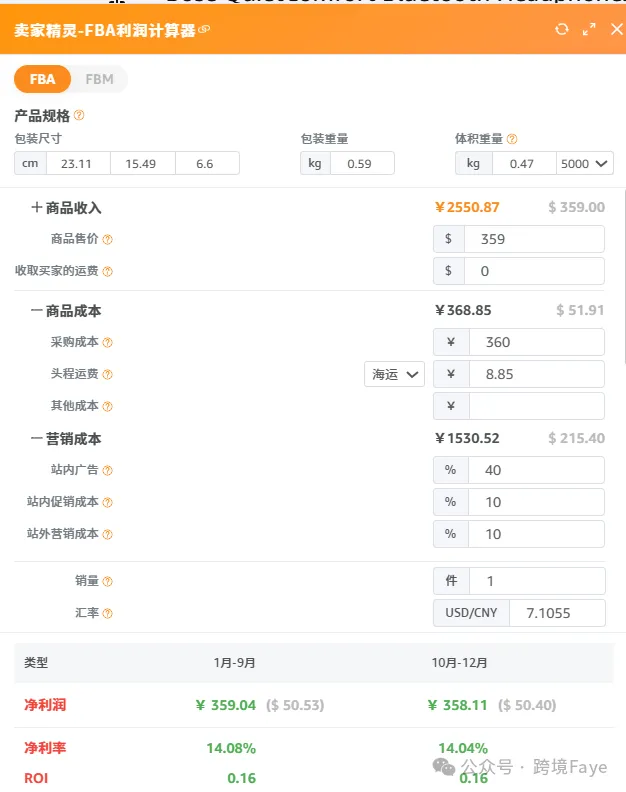
So how do you calculate profit? You need to map out all costs clearly:
- Procurement cost of the product itself
- First-mile ocean freight
- FBA fulfillment fees
- Amazon commission (usually around 15%, varies by category)
- Hidden costs like taxes and discount coupons
Subtract all these from the selling price, and see if there’s any money left.
Let me give you a real example: Suppose a product has a procurement cost of 150 RMB, ocean freight of 20 RMB, FBA fees of 3.9 RMB, and a commission of 9.89 RMB. If its selling price converts to 472 RMB, the gross profit margin is 43%. After deducting roughly 2% for return costs and 10% for advertising budgets, the net profit margin is still 29%—that’s a product worth pursuing.
You don’t have to struggle with a calculator, either. Use a spreadsheet or a third-party tool: plug in the numbers, and it’ll generate the result automatically. It’s more efficient and less error-prone.
Second question: Am I capable of handling this product?
Profit doesn’t mean you can sell the product—you need to check if you can clear the “hurdles” the product itself requires. There are two main ones: patents and certifications.
First, patents: Don’t wait until you’ve already made the product to realize you’re infringing on a patent—that’s a huge loss. The simplest way is to hire a professional service provider to run a check; they’ll give you a report clarifying any patent risks.
Second, certifications: For example, some categories require FDA certification or CE certification. How do you check what’s needed? Two ways:
- Ask the manufacturer directly—they work in this category, so they’ll know exactly what certifications are required.
- Go to Amazon Seller Central, find “Compliance Reference,” and enter the category or keywords—you’ll see the official requirements.
If you’re still unsure, here’s a trick: Create a product listing and simulate the shipping process. If Amazon pops up a certification review halfway through, you’ll know what you’re missing. Then decide if you can get those certifications. If not? Move to another category—don’t force it.
Third question: If I can handle it, how do I actually sell it?
This is where operations come in. Focus on two core areas: reviews and pricing, plus “finding the right selling points.”
Let’s start with reviews: Reviews directly impact conversion rates. If your competitors are all new products but they’re getting 100 reviews a month (with an average rating of 4.6+), ask yourself: Can I match that volume and quality? If not, your conversion rate will be lower than theirs—and you’ll have no competitive edge.
Next, pricing: Never just look at the current selling price! I’ve seen so many sellers mess this up: They see everyone selling a product for \(39.99, so they invest in mold production based on that price. But by the time they list the product, the market has turned competitive, and prices drop to \)29.99—leaving them with unsellable stock.
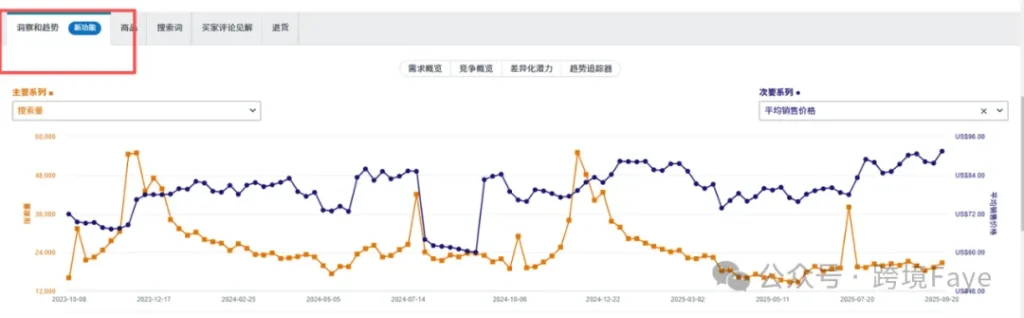
How to avoid this? Check price trends! Go to Amazon Opportunity Explorer, enter the product keywords, and look at the “trend” data for the niche market. For example, if prices dropped by 25% in the past year, you can estimate: They might fall to \(29.99 in six months and \)22.99 in a year. Calculating this trend in advance tells you how long the product will be profitable—and if it’s worth investing in.
Finally, finding selling points: Don’t guess what customers want—use data. For example, use AI-powered review analysis to dig into three things: unmet needs, negative reviews, and positive reviews. Take headphones as an example: 27% of negative reviews complain about “poor sound quality,” 28% of positive reviews praise “great sound quality,” and 10% of unmet needs mention “sound quality.” The overlap here—“sound quality”—is the core selling point customers care about most.
Once you find that selling point, offer “premium features at a lower price.” For example, if competitors sell a headphone model for \(59.99, you can offer the same sound quality and noise-canceling features for \)55.99—that instantly boosts your value proposition.
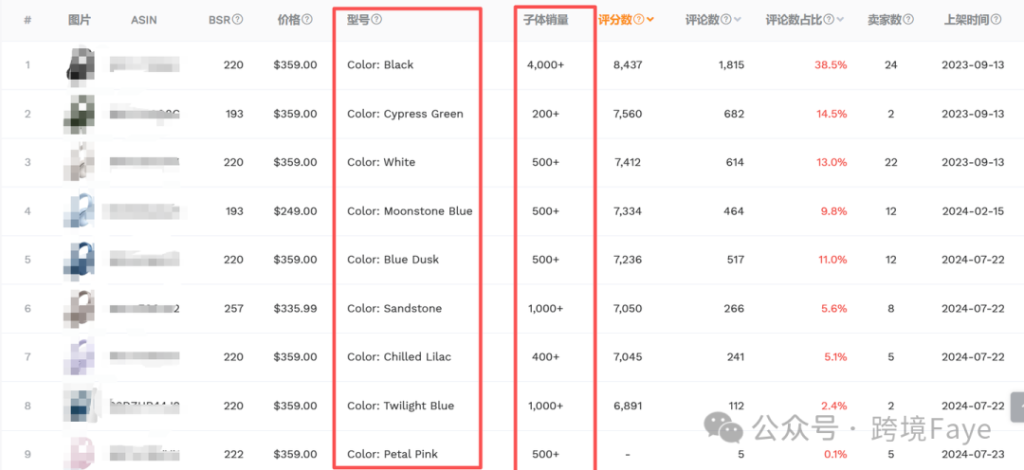
Also, check sales rankings by product attributes: If black models make up 38.5% of sales, don’t insist on launching a pink one just to be “unique.” Stick to attributes the market has already proven—you’ll avoid unnecessary risks.
One last tip on keywords: Every search term represents a customer need. Collect all search terms for your category and do a word frequency analysis. For example, if “headphones” accounts for 12% of searches and “wireless” for 3.87%, you’ll know customers care more about “wireless headphones.” Align your product upgrades and listing copy with these high-frequency terms to reduce mistakes.
Wrapping up
To recap: When selecting a product, stick to these 3 questions:
- Calculate profit first—Is it worth pursuing?
- Check patents and certifications—Can I handle it?
- Focus on reviews, pricing, and selling points—How do I sell it?
Remember: If you’re unsure or hesitant about a product from the start, it’s probably not a good choice. Invest your money in areas with a better ROI (Return on Investment).
If you run into specific issues with product selection, feel free to leave a comment below. We’ll dive into more practical tips next time!